
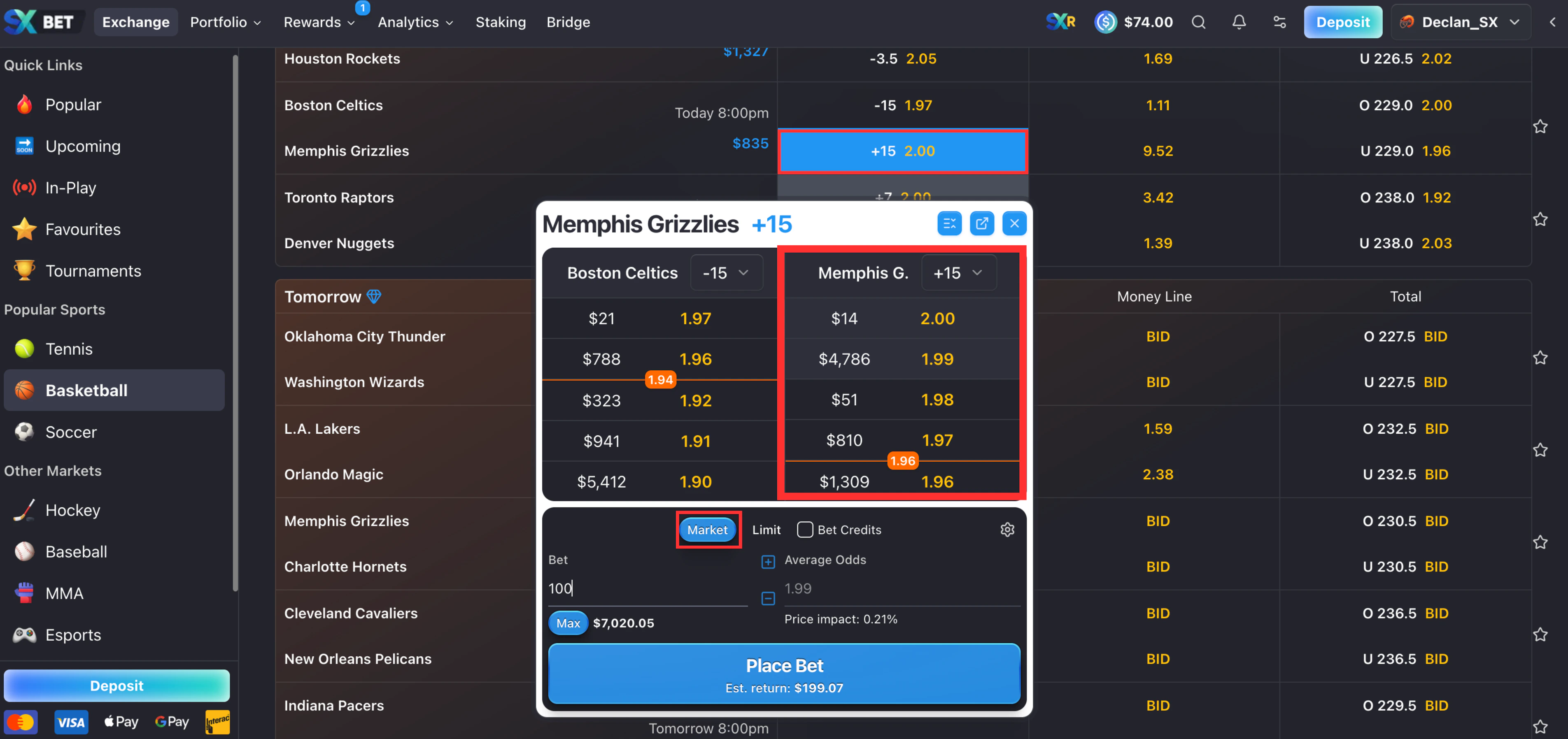
Slippage
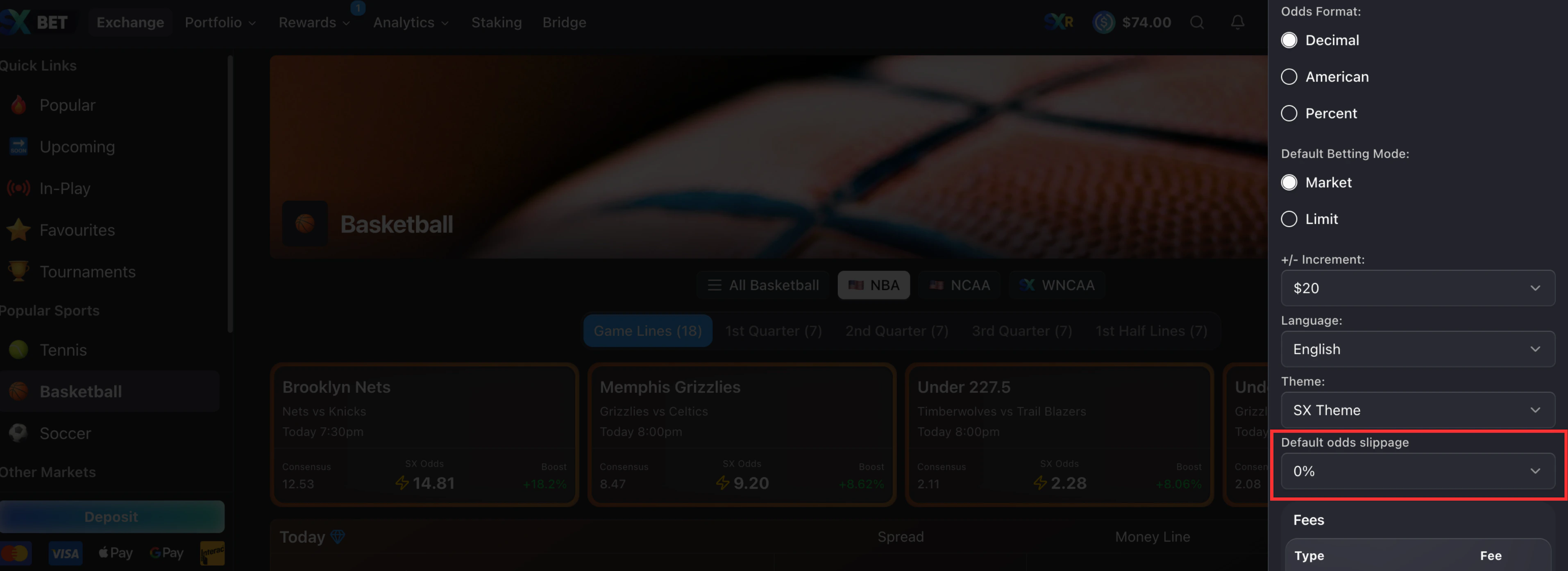
Between the moment you submit a bet and when it’s matched, the order book can change — a maker might cancel their order, or another bettor might fill it before you. Slippage tolerance is how much worse than your selected odds you’re willing to accept for your bet to still go through. You can adjust slippage in two places: Per-bet slippage — overrides slippage for that individual bet only.1
Click the settings icon on your bet slip
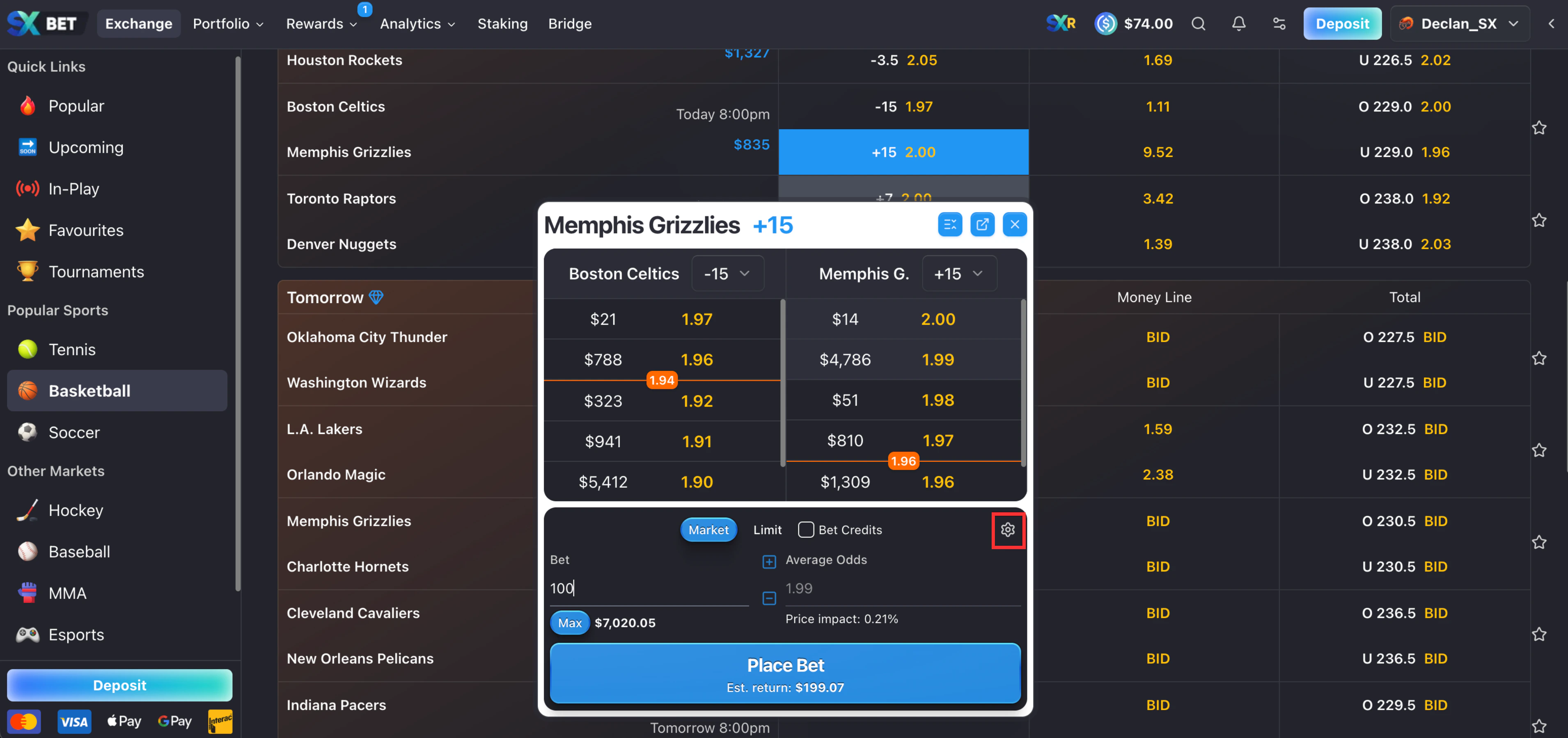
2
Select your desired slippage for this bet
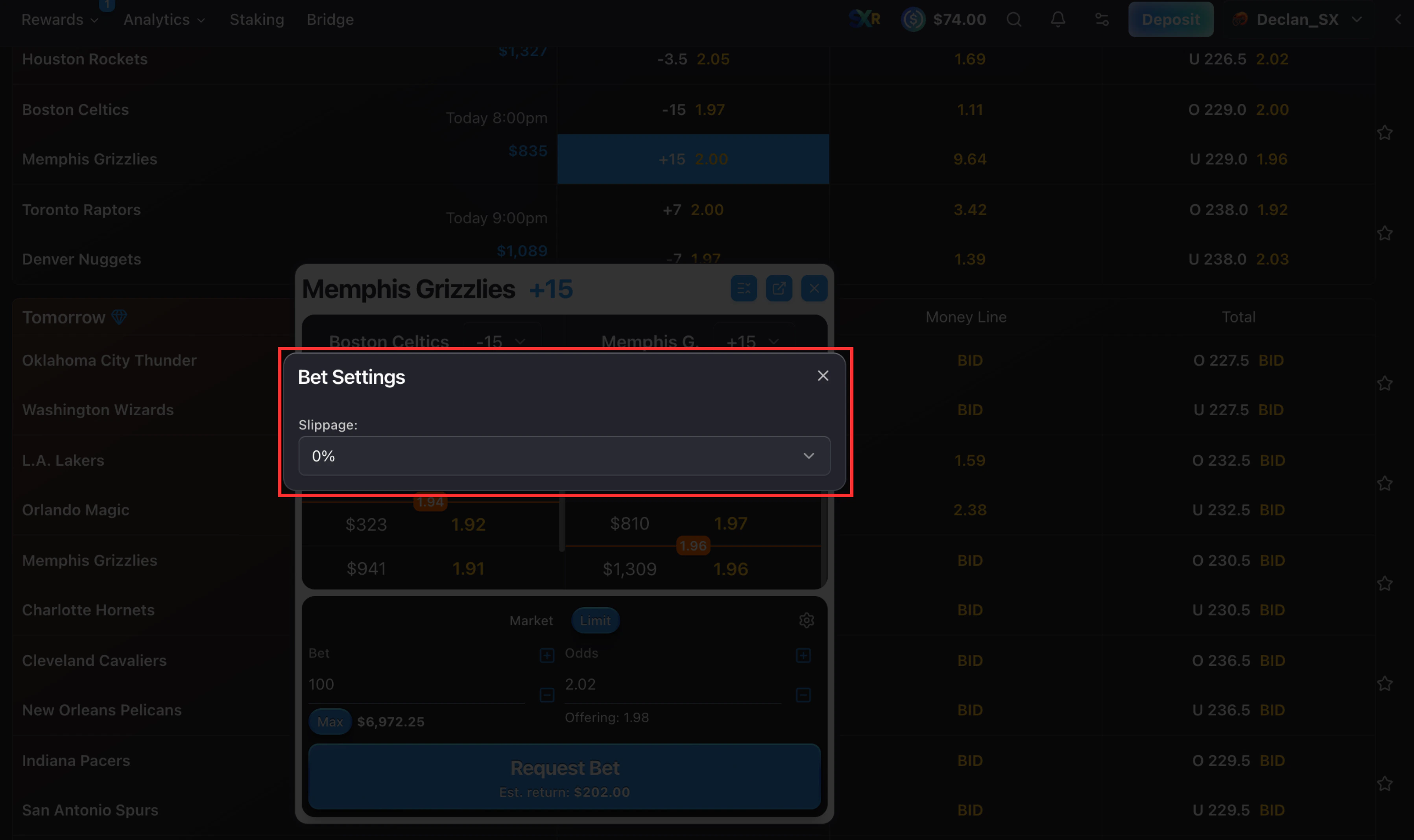
1
Click the settings icon in the menu bar
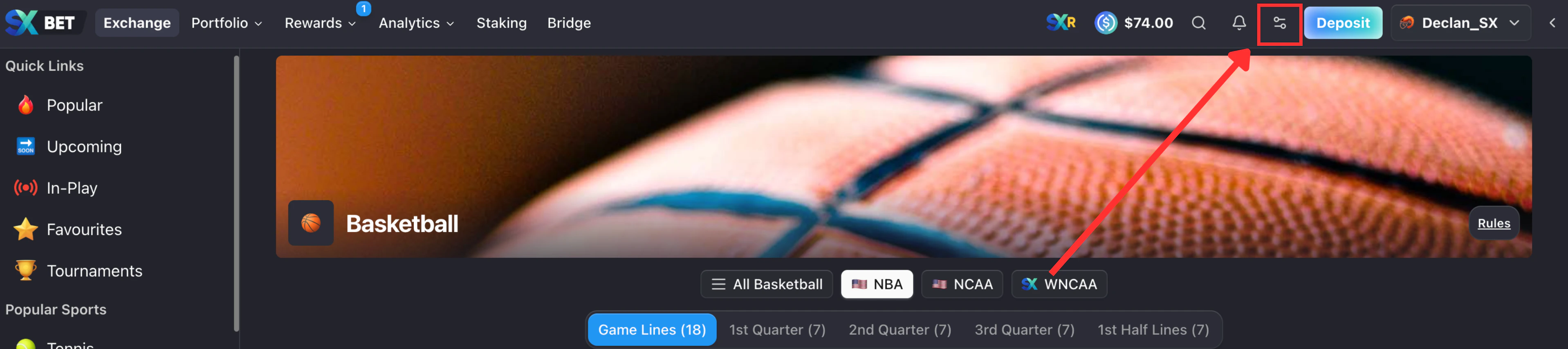
2
Select your desired default slippage from the dropdown
Slippage is calculated on your weighted average odds across the entire bet — not on each individual order. This means your bet can fill across multiple price levels, and as long as the average odds stay within your slippage tolerance, it goes through. A single order at slightly worse odds won’t necessarily cause your bet to fail if the rest of the fill brings the average back within range.
Limit Orders (Maker)
Post your own odds and earn the spread as a market maker.
Reading the Order Book
Learn how to read the order book to find available odds and liquidity.